
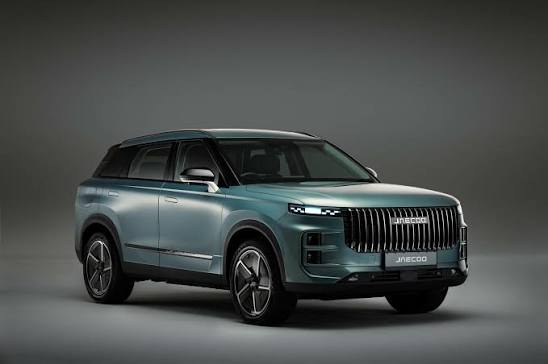
For years, the phrase “Chinese car” was often associated with low prices, basic engineering, and questionable reliability. Many drivers still believe that buying a Chinese vehicle means sacrificing quality in exchange for affordability.
But the global automotive industry has changed dramatically.
Brands such as BYD, Geely, Chery, Changan, GWM, NIO, XPeng, Zeekr and SAIC’s MG have moved from being relatively unfamiliar names outside China to becoming serious competitors in international markets. Some Chinese models now offer advanced technology, strong performance, modern designs and safety standards that compete directly with established Japanese, Korean and European brands.
So, are Chinese cars really lower quality?
The answer is more complicated than simply saying yes or no.
The Old Reputation of Chinese Cars
There is a reason Chinese cars developed a reputation for being lower quality.
Two decades ago, many Chinese manufacturers were still developing their engineering capabilities. Some vehicles were heavily influenced by existing international designs, interior materials could feel inexpensive, and long-term reliability was not always comparable with established Japanese, European or Korean manufacturers.
At the same time, Chinese manufacturers competed heavily on price. This reinforced the perception that a cheaper vehicle must also be a lower-quality vehicle.
However, judging today’s Chinese automotive industry exclusively by its reputation from 10 or 20 years ago is increasingly outdated.
Chinese Cars Have Improved Rapidly
One of the biggest advantages Chinese automakers have today is the speed at which they can develop and introduce new technology.
China has become a major force in electric vehicles, batteries, software and automotive electronics. Companies such as BYD have extensive experience in battery technology and electric powertrains, while other Chinese manufacturers have invested heavily in driver-assistance systems, infotainment and connected-car technology.
This progress is reflected in independent testing.
Euro NCAP has awarded five-star safety ratings to several Chinese models. The BYD SEAL, for example, achieved five stars in Euro NCAP testing, while the BYD SEAL-U also demonstrated strong crash protection. In 2025, models including the Lynk & Co 02, MG P9 EV, OMODA 9 and Zeekr 7X also achieved five-star ratings.
That does not mean every Chinese car is excellent. It does show that “Chinese-made” can no longer automatically be treated as a synonym for “unsafe” or “poorly built.”
But Does Better Technology Mean Better Quality?
Not necessarily.
One of the important distinctions buyers need to understand is the difference between features and quality.
A Chinese car may offer a huge touchscreen, multiple cameras, advanced driver-assistance systems, a panoramic roof, ventilated seats and impressive specifications at a price that seems impossible compared with its competitors.
But having more equipment does not automatically mean the vehicle will be more reliable over 5, 8 or 10 years.
Long-term quality is about how well the car continues to perform after years of heat cycles, road conditions, software updates, component wear and regular use.
Recent industry research illustrates this complexity. J.D. Power’s 2026 China Vehicle Dependability Study found that overall reported dependability problems for internal-combustion vehicles improved slightly compared with the previous year. At the same time, design-related issues remained a major source of complaints.
In the same study, Chery ranked highest among Chinese domestic brands.
The message is important: Chinese automakers have made substantial progress, but the industry is still evolving.
Quality Varies Between Brands
This is perhaps the biggest mistake consumers make when discussing Chinese cars.
“Chinese cars” are not one brand.
Comparing a well-established manufacturer with years of engineering and manufacturing investment to a small brand with limited international experience is like comparing Toyota with an unknown startup simply because both manufacture cars in the same country.
The same principle applies in China.
BYD, Geely, Chery, SAIC, GWM, Changan and other major manufacturers have very different histories, technologies, suppliers, testing procedures and international ambitions.
Some have developed strong reputations in certain markets, while others are still building theirs.
This means consumers should ask:
Which brand? Which model? Which engine or powertrain? Which factory? Which year?
Those questions are far more useful than simply asking whether a car is Chinese.
Safety Is No Longer the Main Weakness
Safety used to be one of the biggest arguments against Chinese vehicles.
Today, that argument is much harder to make across the board.
Independent crash-testing organizations have demonstrated that several Chinese vehicles can meet demanding international standards. BYD’s SEAL, for example, achieved strong Euro NCAP scores, including 89% for adult occupant protection and 87% for child occupant protection.
However, safety performance still varies from model to model.
The Chery TIGGO 7 is a good example. Its initial 2025 Euro NCAP assessment resulted in four stars after issues involving the curtain airbag were identified. Chery subsequently addressed the manufacturing issue, and the model was reassessed.
This is exactly why consumers should look at the specific vehicle’s independent safety rating, rather than making assumptions based on nationality.
Where Chinese Cars Can Still Have Weaknesses
The biggest concerns today are often less about whether a Chinese vehicle can be good and more about how consistently good it will remain over time and how easy it will be to support.
Long-Term Reliability
Some newer Chinese brands simply do not have the decades-long reliability history of manufacturers such as Toyota, Honda or Lexus.
That does not prove that their vehicles will fail sooner. It means there is less historical data available to demonstrate how specific components will perform after 10 or 15 years.
This matters particularly for buyers who plan to keep a vehicle for a very long time.
Parts and After-Sales Support
A car can be mechanically excellent and still become frustrating if replacement parts are difficult to source.
Before buying, consumers should investigate the manufacturer’s local dealership network, warranty terms, spare-parts availability and service infrastructure.
This can be particularly important in smaller markets.
Software and Electronics
Modern vehicles are increasingly software-driven, and Chinese manufacturers often compete aggressively on technology.
That can be a major advantage, but it also means software bugs, infotainment problems and driver-assistance issues can become more important aspects of vehicle ownership.
Industry research has identified infotainment, controls and other technology-related categories among the areas where owners report problems, reinforcing the idea that automotive quality today is about much more than engines and transmissions.
Why Are Chinese Cars Often Cheaper?
Price is another reason people assume Chinese cars must be lower quality.
But lower prices do not necessarily mean poor engineering.
Chinese manufacturers benefit from enormous domestic production volumes and a highly developed automotive supply chain. Competition between manufacturers is also extremely intense.
That allows companies to offer more equipment at a lower price.
In many cases, the buyer is simply getting a different balance of value: more technology and features for the money, but potentially with less proven long-term history than an established premium or Japanese manufacturer.
Of course, aggressive cost-cutting can also create quality problems. Industry research has found that intense price competition can contribute to quality-control challenges.
So, cheaper does not automatically mean worse—but cost pressure can still matter.
The EV Revolution Changed the Game
Electric vehicles have arguably given Chinese manufacturers an even bigger opportunity to compete globally.
Traditional automotive leaders spent decades refining internal-combustion engines, transmissions and mechanical systems. Chinese manufacturers entered the EV market during a period when batteries, software, electronics and electric motors were becoming increasingly important.
That helped some Chinese companies build competitive advantages in areas where the traditional automotive hierarchy was less established.
BYD is perhaps the clearest example. The company is not simply a new car manufacturer; it has extensive experience across batteries, electric drivetrains and vehicle production.
This is one reason Chinese brands have become particularly competitive in the electric vehicle market.
So, Should You Buy a Chinese Car?
For many buyers, the answer can absolutely be yes—but it should be based on the specific vehicle, not the country where it was manufactured.
A good Chinese car can offer excellent value, modern technology, strong safety performance and impressive equipment.
A bad Chinese car can still be a bad car.
The same is true for European, Japanese, Korean and American vehicles.
A Mercedes-Benz can have reliability problems. A Toyota can have defects. A BMW can require expensive repairs. A Chinese car can be extremely dependable.
The important question is not:
“Is it Chinese?”
The better questions are:
“How good is this particular model?”
“How reliable is the powertrain?”
“What do independent crash tests say?”
“How strong is the warranty?”
“Are parts and servicing readily available in my country?”
“What do owners report after several years?”
The Bottom Line
The idea that Chinese cars are automatically lower quality is becoming increasingly difficult to defend.
Chinese automakers have made enormous progress in engineering, safety, electric powertrains, manufacturing and technology. Independent testing and industry research show that some Chinese brands and models can compete with established international manufacturers, while others still have areas that need improvement.
The truth is that the Chinese automotive industry is no longer defined simply by cheap cars.
It is a huge and diverse industry that includes both highly competitive manufacturers and brands that still have more to prove.
For today’s car buyer, nationality should be a starting point for research—not the conclusion.
The smartest approach is to judge every car on its own merits: reliability, safety, engineering, warranty, service support, resale value and total cost of ownership.
And in that respect, Chinese cars are no longer easy to dismiss. Some are genuinely very good. Others are not there yet.
The challenge for consumers is knowing the difference.