
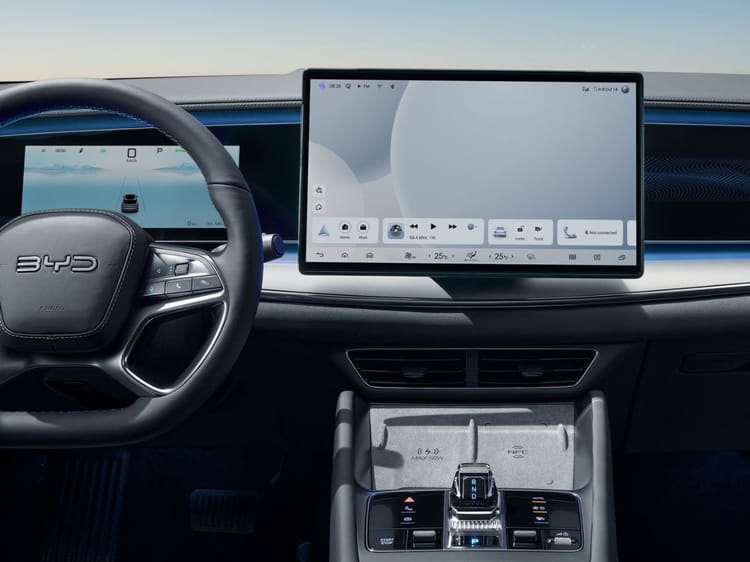
Chinese electric vehicle giant BYD is preparing to make a major move into the UAE’s autonomous mobility landscape, confirming ongoing discussions with local authorities to deploy driverless vehicles and establish a regional research and development centre. An official announcement is expected in January, signalling what could become one of the most significant autonomous vehicle initiatives in the region.
The talks mark a strategic expansion for BYD, which has already overtaken Tesla in global electric vehicle market share. While financial details have not yet been disclosed, senior executives have confirmed that the company is working on a long-term plan that aligns closely with the UAE’s vision for smart mobility, artificial intelligence, and future transport infrastructure.
At the heart of the discussions are two core objectives: introducing BYD autonomous vehicles onto UAE roads and building a dedicated R&D centre to support, localise, and continuously improve the technology. According to Stella Li, Executive Vice President at BYD, the company has a “solid plan” to contribute meaningfully to the UAE’s smart transportation goals, with cooperation accelerating and updates expected in the coming weeks.
The proposed BYD R&D centre in the UAE would play a critical role in adapting autonomous systems to local driving conditions, regulations, climate, and infrastructure. Rather than simply importing finished technology, BYD appears committed to developing and refining its systems within the region, reinforcing the UAE’s ambition to become a global hub for advanced mobility and innovation.
From a technology standpoint, the autonomous fleet is expected to leverage BYD’s DiPilot and “God’s Eye” systems. These platforms combine artificial intelligence, lidar, and advanced sensors, supporting Level 4 autonomous capabilities such as self-parking and high-level automated driving in controlled environments. While the industry is steadily moving toward Level 5 autonomy, where no human intervention is required, BYD has emphasised that safety, regulation, and responsible rollout remain higher priorities than speed.
The timing of BYD’s expansion is particularly notable. The UAE has already positioned itself as one of the world’s leading testbeds for future transportation. Abu Dhabi has welcomed robotaxi pilots through partnerships with Uber and WeRide, while Dubai Taxi Company plans to roll out autonomous taxi services by early 2026. BYD’s entry adds a new dimension to this ecosystem, as it comes not just as a service provider, but as a manufacturer with full control over vehicle design, software, and hardware integration.
This distinction matters. By establishing an R&D presence in the UAE, BYD signals a deeper, longer-term commitment than simple vehicle deployment. It supports knowledge transfer, local talent development, and closer collaboration with regulators, all of which are essential for scaling autonomous mobility safely and sustainably.
Globally, BYD’s strength gives weight to its UAE ambitions. According to Counterpoint Research, BYD held approximately 16 percent of the global EV market share in Q3 2025, compared to Tesla’s 13 percent, with other players trailing further behind. This dominance across budget, mid-range, and increasingly premium EV segments provides BYD with the scale and capital required to invest heavily in autonomous technologies and international expansion.
BYD’s “God’s Eye” system is positioned as a direct competitor to Tesla’s Full Self-Driving technology, reflecting the company’s broader pivot away from traditional combustion engines toward fully electric, intelligent, and autonomous systems. While some legacy manufacturers continue to celebrate petrol-powered performance milestones, BYD is betting decisively on a future shaped by AI-driven mobility.
Looking ahead, the expected January announcement should provide clarity on key details, including the location of the R&D centre, the regulatory framework, and which vehicle models will be used in the initial deployment. Early phases are likely to focus on controlled environments and proof-of-safety trials, with wider rollout targeting affordable, mass-market vehicles once regulations permit.
If confirmed, BYD’s autonomous push could become a cornerstone of the UAE’s smart mobility strategy, reinforcing the country’s reputation as a global leader in future transport while positioning BYD as a central player in the next phase of autonomous driving innovation.