
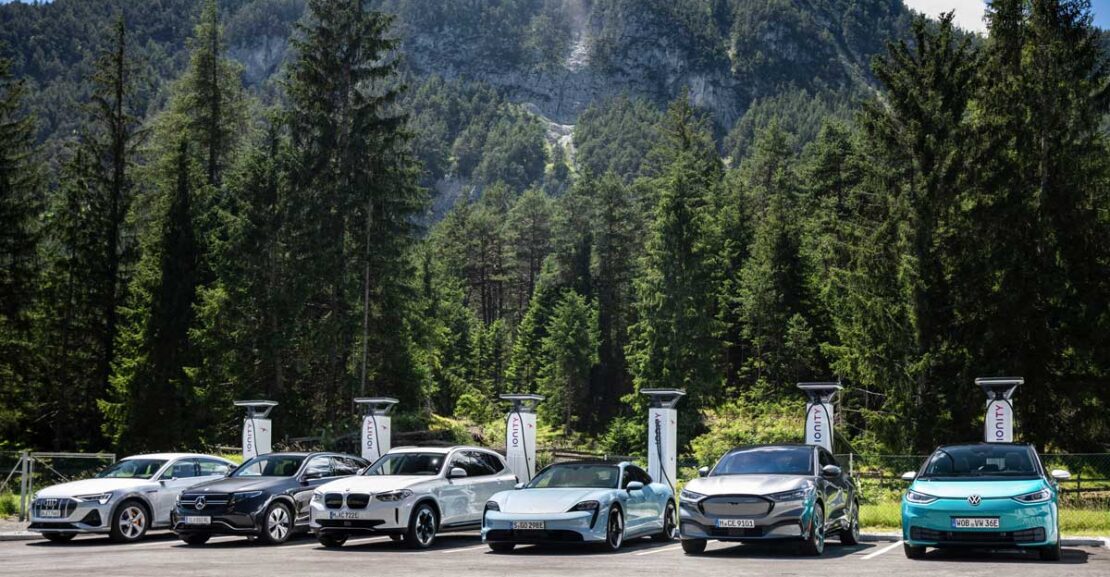
Europe is witnessing a dramatic shift in its automotive landscape as electric vehicle sales soar, fueled by the economic ripple effects of the ongoing Iran war. What began as a geopolitical conflict has quickly translated into a real-world financial burden for consumers, particularly at the fuel pump. As petrol and gas prices climb sharply, European drivers are increasingly turning toward electric vehicles as a more stable and cost-effective alternative.
The war, which disrupted key global oil supply routes, has pushed fuel prices significantly higher across international markets. With vital shipping corridors affected, oil supply constraints have translated directly into rising petrol costs throughout Europe. In the European Union alone, petrol prices surged by around 12 percent within weeks of the conflict’s escalation, putting immediate pressure on households and businesses alike. ()
This surge in fuel costs has created the perfect conditions for a rapid acceleration in electric vehicle adoption. In March 2026 alone, electric car registrations across Europe jumped by more than 50 percent, marking one of the strongest monthly growth rates in recent years. Over 224,000 electric vehicles were registered in that single month, contributing to more than half a million units sold in the first quarter of the year.
The trend is not limited to new vehicles. The used electric vehicle market is also booming, with platforms across Europe reporting a sharp increase in demand. In some cases, electric cars have overtaken diesel models as the most sought-after option. This shift highlights a broader behavioral change among consumers, who are now prioritizing long-term savings and protection against fuel price volatility over traditional preferences.
Major European economies are leading the charge. Countries such as Germany, France, Spain, Italy, and Poland have all reported electric vehicle sales growth exceeding 40 percent so far this year. Meanwhile, Nordic nations continue to dominate in adoption rates, supported by strong government incentives and well-developed charging infrastructure. In some of these markets, electric vehicles now account for the vast majority of new car sales.
Beyond cost savings, energy security is emerging as a key driver of this transition. The move toward electric mobility reduces dependence on imported oil, a vulnerability that has been sharply exposed by the ongoing conflict. Industry estimates suggest that the recent surge in electric vehicle adoption could cut Europe’s oil consumption by millions of barrels annually, reinforcing the strategic importance of the shift.
What makes this moment particularly significant is the speed of change. While electric vehicles have been gaining traction for years, the Iran war has acted as a catalyst, compressing what might have been a gradual transition into a rapid transformation. Consumers who may have hesitated in the past are now making quicker decisions, driven by the immediate financial impact of rising fuel prices.
Looking ahead, the key question is whether this surge represents a temporary spike or a permanent shift. Early indicators suggest that consumer behavior may not fully revert even if fuel prices stabilize. The experience of volatile petrol costs has reshaped perceptions, making electric vehicles not just an environmentally conscious choice, but a financially strategic one.
In many ways, the current situation reflects a broader reality. Global conflicts no longer remain confined to political arenas. Their consequences ripple through economies, industries, and everyday consumer decisions. In Europe, one of the clearest outcomes so far has been the acceleration of the electric vehicle revolution, driven not just by policy or innovation, but by necessity.