
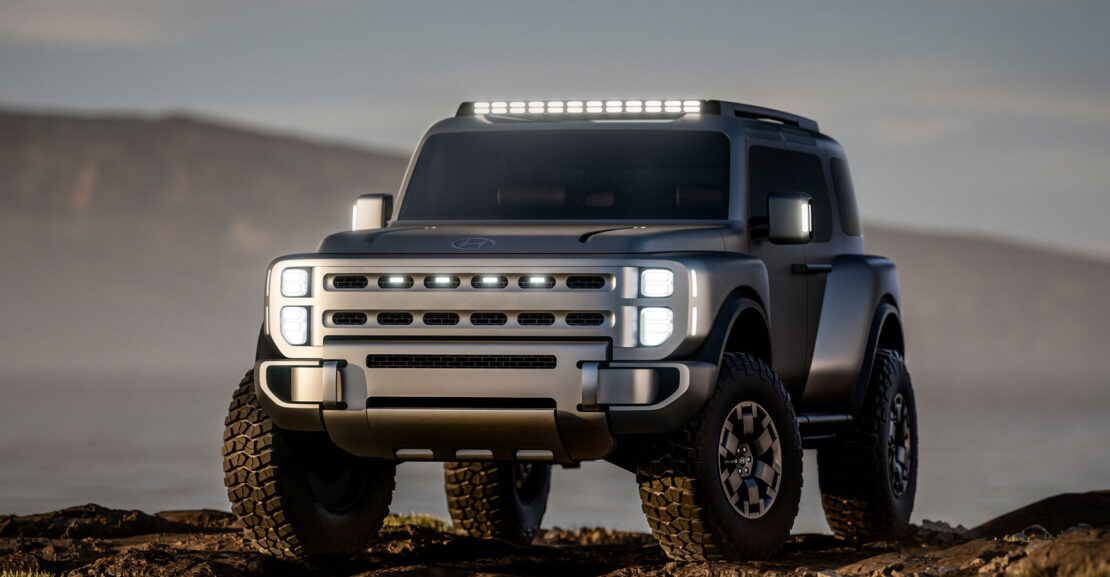
The automotive world witnessed a major surprise at the New York International Auto Show 2026 with the unveiling of the Hyundai Boulder Concept—a vehicle that signals a dramatic shift in Hyundai’s direction. Moving beyond its comfort zone of urban SUVs and crossovers, Hyundai has introduced a rugged, off-road-focused concept that blends futuristic design with serious utility.
This isn’t just another concept car—it’s a statement.
A New Chapter for Hyundai
The Boulder Concept represents Hyundai’s entry into the body-on-frame segment, a territory long dominated by traditional American automakers. Unlike unibody SUVs, body-on-frame vehicles are built for durability, towing, and extreme off-road conditions.
Hyundai confirmed that this concept previews a future midsize pickup platform expected by 2030, designed specifically for the U.S. market.
This strategic move highlights Hyundai’s ambition to compete head-on with established off-road icons like the Ford Bronco and Jeep Wrangler, positioning itself as a serious contender in the adventure and utility space.
Design: “Art of Steel” Meets Brutal Strength
At first glance, the Boulder Concept looks like it belongs in a sci-fi movie. Its design follows Hyundai’s new “Art of Steel” philosophy, emphasizing strength, structure, and raw material expression.
Key exterior highlights include:
- A bold, boxy silhouette with an upright stance
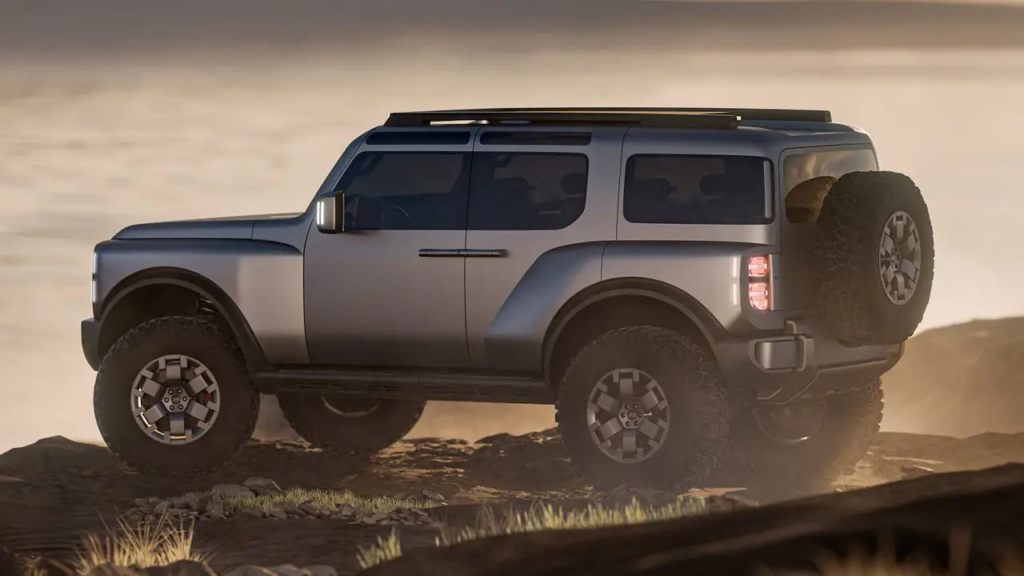
- Massive 37-inch all-terrain tires for extreme off-road capability
- High ground clearance and aggressive proportions
- A versatile tailgate with dual-opening functionality and a roll-down rear window
The overall aesthetic is both industrial and futuristic, blending ruggedness with refined design cues.
Built for Adventure
The Boulder Concept isn’t just about looks—it’s engineered with purpose.
Built on a ladder-frame (body-on-frame) architecture, the SUV is designed to handle:
- Heavy towing and hauling
- Extreme terrain conditions
- Long-distance adventure travel
This construction style is widely regarded as the backbone of serious off-road vehicles, making the Boulder Hyundai’s most capable concept to date.
Interior: Where Tech Meets Toughness
Inside, Hyundai has taken a unique approach—combining durability with high-tech innovation.
Notable interior features include:
- A cockpit-inspired dashboard with multiple screens
- A head-up display stretching across the windshield
- Physical buttons and knobs for practical usability
- Rugged materials designed for real-world wear and tear
The result is a cabin that feels both futuristic and functional—perfect for drivers who demand performance without sacrificing comfort.
A Glimpse Into Hyundai’s Future
The Boulder Concept is more than a one-off design—it represents Hyundai’s long-term strategy. The company is investing heavily in expanding its lineup, with plans to introduce 36 new vehicles in North America by 2030.
More importantly, it signals Hyundai’s intent to:
- Enter the competitive pickup truck market
- Strengthen its presence in North America
- Redefine its brand identity beyond urban mobility
Undeniably Exciting
The 2026 Hyundai Boulder Concept is bold, unexpected, and undeniably exciting. It breaks away from Hyundai’s traditional image and introduces a new identity—one built on strength, adventure, and innovation.
While it remains a concept for now, its influence is clear: Hyundai is preparing to become a serious player in the off-road and pickup segment.
And if the Boulder is any indication, the future looks rugged.