
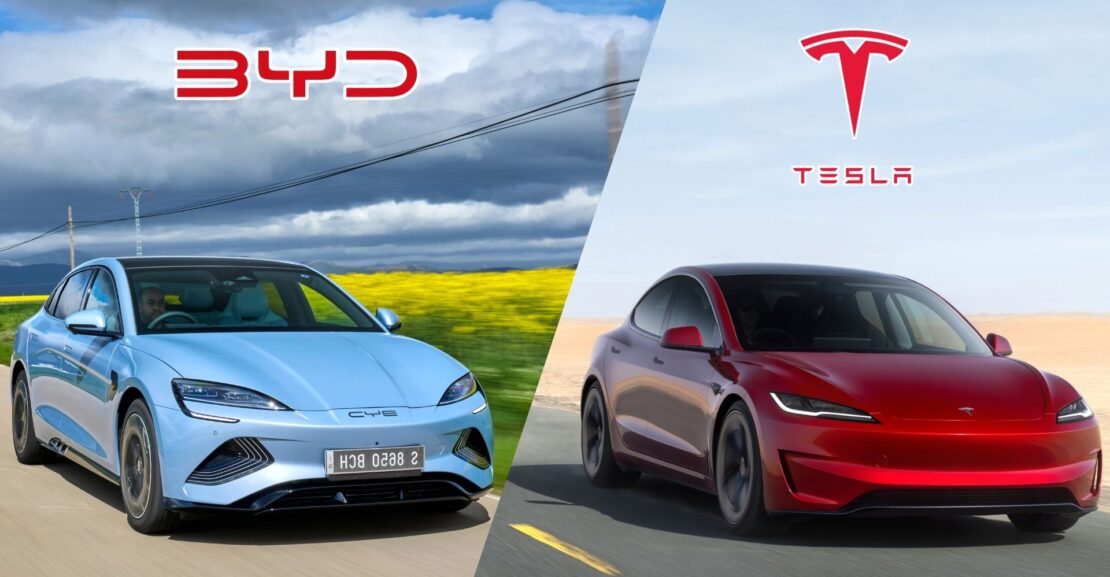
China’s electric vehicle giant BYD has officially overtaken Tesla to become the world’s biggest seller of electric cars, marking a major turning point in the global EV race. What once seemed like a market dominated by Silicon Valley innovation is now being reshaped by China’s scale, speed, and strategic manufacturing advantage.
BYD’s rise has been years in the making. Unlike many automakers, the company controls almost its entire supply chain, from battery production to final vehicle assembly. This vertical integration has allowed BYD to reduce costs, scale faster, and remain resilient amid global supply chain disruptions that have challenged competitors.
Price has been one of BYD’s strongest weapons. By offering a wide range of affordable electric and plug-in hybrid vehicles, the company has captured mass-market consumers, particularly in China and other emerging markets. Tesla, while still dominant in brand perception and technology leadership, has focused more heavily on premium and mid-range segments, making it more vulnerable to aggressive pricing strategies.
Another key factor behind BYD’s success is its strong domestic backing. China’s EV-friendly policies, infrastructure investment, and consumer incentives have helped local manufacturers thrive. BYD leveraged this environment to dominate its home market before rapidly expanding into Europe, the Middle East, Latin America, and parts of Asia.
Tesla, meanwhile, continues to lead in software, autonomous driving development, and global brand influence. However, increased competition, margin pressure, and slowing demand growth in some markets have allowed rivals like BYD to close the gap, and ultimately overtake it in sales volume.
This shift does not signal Tesla’s decline, but rather the maturation of the electric vehicle industry. The EV market is no longer a one-company story. It is becoming a fiercely competitive global arena where scale, cost efficiency, and regional strategy matter as much as innovation.
BYD’s ascent is also a signal to traditional automakers worldwide. The future of electric mobility will be shaped not only by technology, but by who can deliver high-quality EVs at prices accessible to the masses.
As the industry moves into its next phase, one thing is clear: the race for electric dominance is far from over, and it is now truly global.