

Toyota has officially stepped into the supercar arena with its most radical creation in over a decade—the all-new GR GT. Debuting as the flagship model of the newly established GR (Gazoo Racing) brand, the GR GT marks a historic moment for Toyota, blending hybrid performance, motorsport engineering, and bold design into a machine capable of challenging the world’s finest supercars.
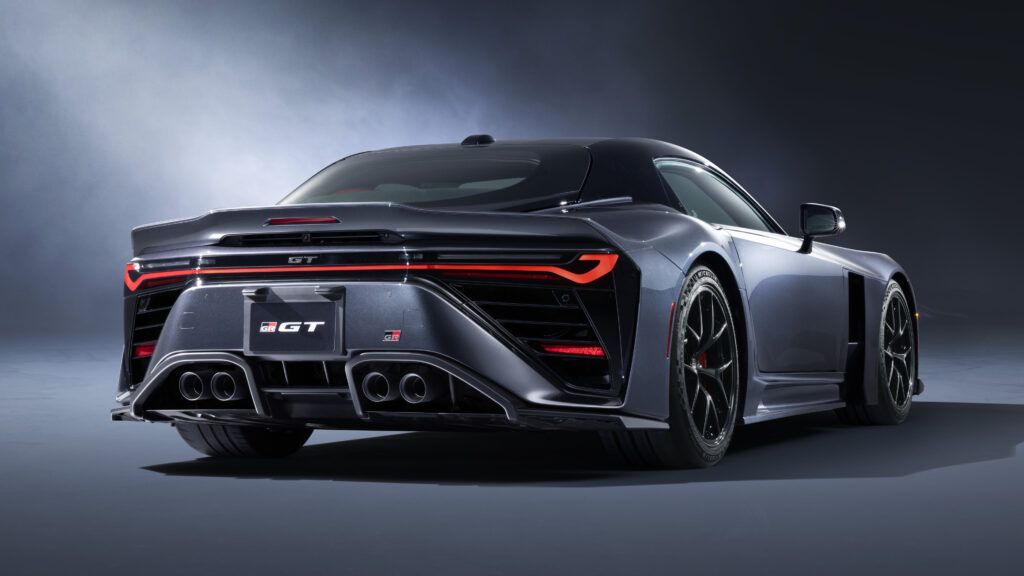
As Toyota formalizes Gazoo Racing as a standalone performance division—joining Toyota, Lexus, and the upcoming Century brand—the GR GT arrives not just as a car, but as a statement. Expected to start at around $350,000 to $400,000 in the U.S., and possibly reach the half-million-dollar mark, this new flagship enters the realm of heavy hitters like the Ferrari 296, McLaren 750S, Porsche 911 GT3 RS, Aston Martin Vanquish, and Ford Mustang GTD. For Toyota, a brand long known for reliability and mass-market appeal, this is a seismic shift toward ultra-exclusive performance.
At the heart of the GR GT lies Toyota’s first-ever twin-turbo V-8 engine, a short-stroke 4.0-liter masterpiece nestled under a remarkably low hood. Paired with an electric motor integrated into the rear-mounted eight-speed automatic transmission, the hybrid powertrain produces a combined output of at least 641 horsepower and 627 lb-ft of torque. With its dry-sump system, carbon-fiber torque tube, and rear transaxle layout, this drivetrain promises exhilarating performance and a top speed surpassing 199 mph. The setup mirrors the brand’s racing DNA, developed in conjunction with the GR GT3 race car to ensure motorsport-grade responsiveness on the road.
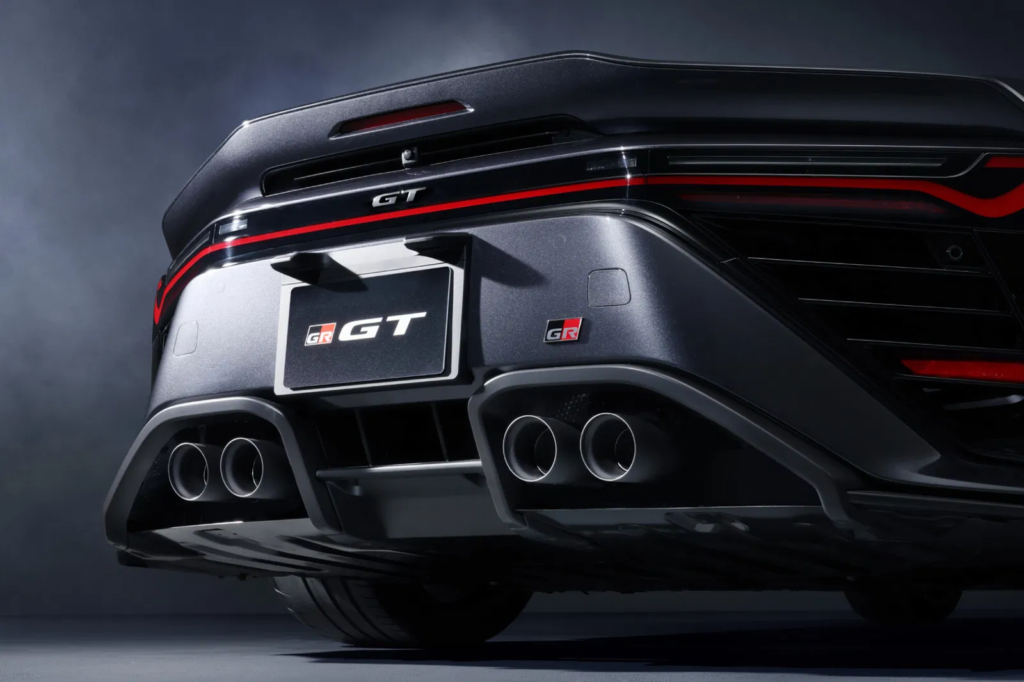
While Toyota’s legendary LFA was crafted primarily from carbon fiber, the new GR GT adopts a different approach. Built on an aluminum structure featuring four massive megacast pieces—each anchoring a corner of the suspension—the car combines lightweight materials strategically, using carbon fiber for the doors, roof, hood, and rear bulkhead. Michelin Pilot Sport Cup 2 tires, carbon-ceramic brakes, and a control-arm front suspension further enhance its track-ready capability.
Visually, the GR GT commands attention with the presence of a hypercar. Its proportions are aggressive yet refined, with a low roofline of just 47 inches—six inches lower than the AMG GT and comparable to Ferrari’s sleekest models. The long hood, compact cabin, and crisp aerodynamic lines make the GR GT look faster than anything Toyota has ever produced. It’s bold, muscular, and unmistakably built to perform.
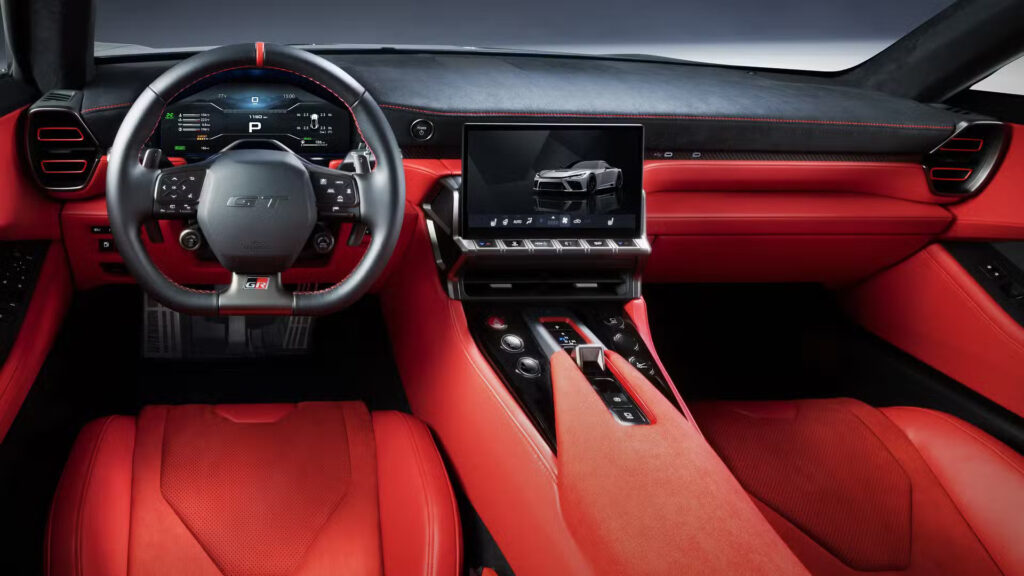
Inside, the cockpit channels modern Lexus luxury infused with GR’s racing mentality. Expect a digital gauge cluster, driver-focused ergonomics, and styling cues that evolve the LFA’s minimalist performance-first ethos. A camera-based rearview mirror compensates for limited visibility, ensuring the driver sees exactly who’s trailing behind.
The GR GT also represents a cultural milestone for Toyota. Inspired by the Japanese tradition of Shikinen Sengu—where a temple is periodically rebuilt to pass knowledge between generations—the development of the GR GT was conceived as a way to transfer the hard-earned expertise from the LFA era to the next generation of engineers. It’s a philosophy of continuous rebirth and mastery, echoed in every detail of this machine.
When the GR GT arrives in the U.S. next year, it will be sold exclusively through select Lexus dealerships, signaling Toyota’s commitment to positioning GR as a true high-performance brand. In Japan, Gazoo Racing models will be housed under their own dedicated sales channel. How GR’s more accessible performance models, like the GR Corolla and GR Supra, will coexist with this new halo supercar will be fascinating to watch.
With the GR GT, Toyota is not just building a supercar—it is redefining its performance identity. This hybrid twin-turbo V-8 machine marks the brand’s boldest leap toward automotive excellence since the LFA, and if early impressions are any indication, Toyota may have created a new benchmark for what a front-engine hybrid supercar can be.