
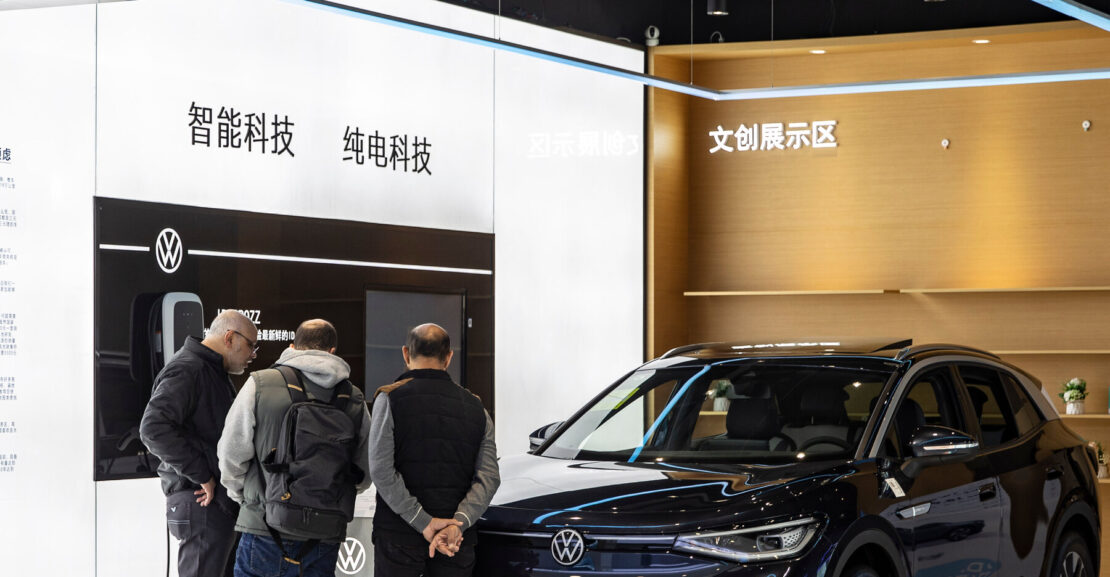
German auto giant Volkswagen is ramping up a major shift in its global export strategy. As of late November 2025, Volkswagen confirmed it will expand exports of vehicles manufactured in China to several overseas markets while explicitly ruling out sending those China‑made models to Europe.
What’s Changing and Why
Volkswagen has already begun exporting China‑made petrol sedans to the Middle East. The company is now evaluating potential new export markets including Southeast Asia and Central Asia. Both internal‑combustion engine models and electric vehicles built in China could be part of the export plan.
According to Volkswagen’s Asia‑region leadership, this expansion is rooted in the automaker’s “In China for China” strategy, which leverages its Chinese production and R&D hub to accelerate development cycles, reduce costs, and respond faster to global competition, especially competition from rising Chinese automakers.
Volkswagen claims it can now develop entirely new vehicle platforms and technologies in China, including EVs, and that doing so can cut development costs by as much as 50% compared with traditional development in Germany or elsewhere.
Why Europe Is Off the Table
Despite its global ambitions, Volkswagen will not export its Chinese‑made cars to Europe. The main reason cited is technical: the electronic architecture and software systems used in the China‑built “smart vehicles” differ significantly from those required in the European market. Models engineered and built for Asia or Middle‑East markets using Chinese platforms may not meet the same regulatory, technological or consumer‑expectation standards in Europe. For that reason, Volkswagen says it will keep China‑made exports out of the European market, at least for now.
What This Means for Volkswagen and Global Auto Markets
Cost competitiveness: By producing in China at lower cost and exporting to growing markets, Volkswagen hopes to stay price‑competitive, especially as Chinese automakers expand aggressively abroad.
Faster innovation cycles: Having full development and approval processes based in China allows Volkswagen to be more agile, which can be a big advantage as global demand shifts, especially in EVs.
Targeted regional roll-out: Focusing on Asia, the Middle East, and other emerging markets means Volkswagen can match its China‑made offerings to markets where feature requirements, regulations, and price sensitivity align more closely with those cars.
Maintaining European legacy: By excluding Europe, Volkswagen is implicitly acknowledging that European consumers and regulators may expect different standards in software, safety, emissions, or other specifications, which China‑made cars might not yet meet or be optimized for.
What to Watch Next
Volkswagen expects to soon begin selling cars built on its China‑developed electronic architecture outside China. The success of these exports will depend heavily on how well China‑made vehicles fit the needs and regulations of each target market. For Europe, it remains to be seen if or when Volkswagen will try to adapt its Chinese‑built cars for launch there.